In today’s digital world, receiving calls from unknown numbers has become a common experience for millions of people across the globe. One such number that may spark curiosity is 9253612736. Whether a person notices this number through a missed call, repeated contact attempts, spam alerts, or online searches, the natural reaction is usually the same: people want to know who called, why the call was made, and whether the number is safe.
The rise of smartphone technology has transformed communication into something instant and highly accessible. While this advancement has improved convenience and connectivity, it has also created opportunities for spam callers, telemarketing operations, robocalls, and digital scams. Unknown numbers often trigger concern because modern phone scams have become increasingly sophisticated. Criminals sometimes use local-looking numbers, automated systems, or fake identities to gain trust and manipulate individuals.
Because of these risks, many users search specific phone numbers online to understand whether other people have reported suspicious activity connected to them. Searches for numbers like 9253612736 are usually driven by caution, curiosity, or previous negative experiences with spam calls. In some cases, the number may belong to a legitimate business or individual. In other situations, it may simply be associated with automated marketing systems or potentially suspicious communication.
Understanding how unknown phone numbers work, why people search them online, and how to protect yourself from potential fraud is extremely important in the modern digital era. This article explores the broader topic surrounding unknown calls, phone scams, privacy concerns, caller identification methods, and the steps individuals can take to stay safe.
Why People Search Phone Numbers Online
The internet has changed the way people investigate suspicious calls. Years ago, if someone received a call from an unfamiliar number, there were very few ways to identify the caller unless a voicemail was left. Today, search engines, community reporting websites, caller ID applications, and online forums allow users to quickly investigate unknown numbers.
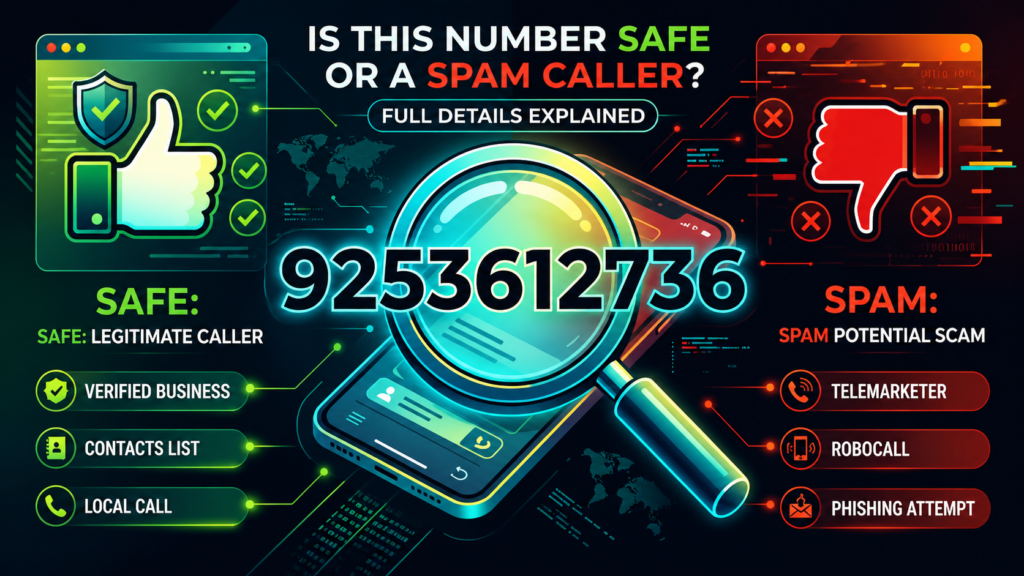
When individuals search numbers such as 9253612736, they are usually trying to answer several important questions. First, they want to determine whether the caller is legitimate or potentially dangerous. Second, they want to know whether other people have experienced similar calls from the same number. Third, they want to understand if the number is linked to telemarketing, debt collection, scams, surveys, or automated robocalls.
This behavior reflects growing public awareness about digital security. Modern users are more cautious because cybercrime and phone-based fraud continue increasing worldwide. Unknown numbers can sometimes be harmless, but repeated calls, silent calls, aggressive behavior, or suspicious requests for personal information often raise concerns.
Search engines have therefore become a first line of defense for many smartphone users. Instead of immediately returning calls, people now investigate the number online first. This simple action can prevent financial scams, identity theft, and unwanted harassment.
The Rise of Spam Calls and Robocalls
Spam calls have become one of the biggest frustrations for mobile phone users. Around the world, billions of robocalls are made every month. These calls often use automated systems capable of dialing massive lists of phone numbers within seconds.
The purpose of spam calls varies widely. Some callers promote products or services through aggressive telemarketing campaigns. Others attempt to collect financial information, banking credentials, or personal data through deceptive tactics. More dangerous scams may involve impersonating government agencies, banks, insurance companies, or technology support services.
Unknown numbers such as 9253612736 sometimes become associated with public concern simply because users cannot immediately identify the source of the call. Even when a number is harmless, repeated contact attempts without explanation may cause anxiety.
Robocalls are especially problematic because they often rely on automation instead of human interaction. Many systems can generate fake caller identities or “spoof” local numbers to appear trustworthy. This technique increases the likelihood that people will answer the phone.
The emotional impact of spam calls should not be underestimated. Repeated interruptions can create stress, frustration, and fear, especially among older individuals who may be more vulnerable to scams. Many people now avoid answering calls entirely unless the caller is already saved in their contacts.
Understanding Phone Number Spoofing
One major reason unknown numbers cannot always be trusted is a technique called caller ID spoofing. Spoofing occurs when callers deliberately disguise their real number and replace it with a different one.
This means that the number appearing on a phone screen may not actually belong to the person making the call. Scammers frequently use spoofing to imitate local area codes or legitimate-looking numbers. Their goal is to increase trust and convince recipients to answer.
For example, a person might receive a call from 9253612736 and assume it belongs to someone nearby because the number format appears normal. However, spoofing technology allows scammers to create misleading caller IDs with relative ease.
This tactic has become extremely common in phone fraud schemes. Many individuals mistakenly assume that local-looking numbers are safer than international numbers, but scammers are aware of this psychological tendency.
Because spoofing is so widespread, users should never rely solely on caller ID for verification. Even if a number appears legitimate, it is important to remain cautious when dealing with unexpected requests involving money, passwords, verification codes, or sensitive personal information.
Common Types of Phone Scams
Phone scams have evolved significantly over the years. Criminal organizations now use advanced psychological tactics to manipulate victims emotionally and financially. Understanding common scam categories can help people recognize suspicious behavior more quickly.
One of the most widespread scams involves fake banking alerts. Callers claim there is suspicious activity on a bank account and ask victims to confirm personal details or verification codes. These scams often create urgency to pressure individuals into acting without thinking carefully.
Another common scam involves fake government representatives. Callers may pretend to represent tax authorities, immigration departments, law enforcement agencies, or legal offices. Victims are threatened with penalties, arrests, or account suspension unless immediate payment is made.
Technology support scams are also increasingly common. Fraudsters claim a computer or mobile device has been hacked and convince victims to install remote access software. Once access is granted, criminals may steal files, passwords, or banking information.
Prize and lottery scams target individuals by claiming they have won money or rewards. Victims are told they must first pay taxes, processing fees, or administrative charges before receiving their supposed prize.
Romance scams, family emergency scams, and fake delivery service scams have also become widespread. In many cases, unknown numbers repeatedly contact individuals to build familiarity before attempting manipulation.
The important lesson is that any unexpected caller requesting money, sensitive information, passwords, or urgent action should be treated with caution.
How Caller Identification Apps Work
Many people rely on caller identification apps to screen unknown calls. These applications collect large databases of phone numbers reported by users worldwide. When a call arrives, the app attempts to identify the number based on previous reports or public records.
Apps such as Truecaller and similar services have become extremely popular because they help users avoid spam and identify potential scams. If many users report a number for suspicious activity, the app may display warnings when that number calls others.
However, these systems are not perfect. Sometimes legitimate businesses or individuals may accidentally be labeled as spam. In other cases, scammers continuously change numbers faster than databases can update.
Despite these limitations, caller identification apps provide an additional layer of awareness and convenience. They help users make informed decisions about whether to answer, ignore, or block calls.
Searching numbers like 9253612736 online often reflects the same goal: users want confirmation about whether the call appears trustworthy.
The Psychological Impact of Unknown Calls
Unknown calls affect more than just convenience. They also influence emotional well-being and digital trust.
Many people experience anxiety when receiving repeated calls from unfamiliar numbers. This is especially true if calls occur frequently, late at night, or during work hours. Individuals may worry about emergencies, legal issues, financial problems, or personal safety.
Older adults are particularly vulnerable because they may be less familiar with modern scam tactics. Criminals often exploit fear, urgency, and confusion to manipulate victims emotionally.
Even younger individuals can experience stress from constant spam interruptions. Frequent robocalls may reduce trust in phone communication entirely. Some people stop answering all unknown calls, which can create practical problems if legitimate businesses or medical providers attempt contact.
Digital trust has become a major issue in the smartphone era. Communication systems are most effective when people feel secure using them. Unfortunately, widespread scam activity has weakened public confidence in unknown callers.
How to Protect Yourself From Suspicious Numbers
Protecting yourself from suspicious calls requires awareness, caution, and smart digital habits.
The first and most important rule is to avoid sharing personal information with unexpected callers. Legitimate organizations rarely ask for passwords, banking credentials, verification codes, or sensitive details over the phone.
Second, avoid acting under pressure. Scammers frequently create urgency because emotional reactions reduce logical thinking. If someone demands immediate action involving money or personal information, pause and verify independently.
Third, use smartphone blocking features. Most modern phones allow users to block specific numbers easily. Blocking repeated spam calls can significantly reduce interruptions.
Fourth, consider using caller identification or spam filtering applications. These tools help identify suspicious numbers and reduce robocall exposure.
Fifth, never click suspicious links sent through text messages connected to unknown callers. Many scams combine phone calls with phishing links designed to steal passwords or install malware.
Sixth, report suspicious numbers to local authorities, telecom providers, or scam reporting platforms. Public reports help warn other users and strengthen spam databases.
Finally, educate family members about modern scam tactics. Awareness is one of the strongest defenses against digital fraud.
The Role of Telecom Companies
Telecommunication companies play a major role in combating spam and scam calls. Around the world, telecom providers are investing in technologies designed to detect suspicious calling behavior.
Some systems use artificial intelligence and traffic analysis to identify robocall patterns. Others attempt to verify whether caller identities are authentic.
Governments and regulators have also introduced rules requiring stronger caller authentication systems. These measures aim to reduce spoofing and increase accountability.
Despite these efforts, scammers continue adapting quickly. Fraud operations often operate internationally, making enforcement difficult.
The challenge facing telecom companies is balancing privacy, convenience, and security while maintaining efficient communication networks.
Consumers therefore remain responsible for exercising caution and awareness.
Why Curiosity About Unknown Numbers Continues Growing
Search interest in numbers like 9253612736 reflects broader societal changes in communication habits.
In earlier decades, receiving a phone call usually implied familiarity or importance. Today, however, many calls are automated, promotional, or potentially fraudulent.
As a result, people increasingly investigate unknown numbers before responding. This behavior demonstrates a more cautious and informed digital culture.
Searches for unknown numbers also reflect the public’s desire for transparency and safety. People want reassurance before engaging with unfamiliar communication.
The internet has transformed individual caution into collective awareness. Community reporting platforms allow users to share experiences, helping others avoid suspicious activity.
This collaborative approach has become an important defense mechanism in the fight against digital scams.
How Smartphones Changed Communication Security
Smartphones revolutionized global communication, but they also created new security challenges.
Modern phones contain sensitive personal information including banking apps, private photos, passwords, emails, and social media accounts. Because smartphones store so much valuable data, scammers increasingly target mobile users.
Phone calls are now often connected to broader cybercrime strategies. Criminals may use calls to gain trust before sending malicious links, requesting authentication codes, or launching identity theft attacks.
The convenience of smartphones has therefore increased the importance of cybersecurity awareness.
Users must understand that digital safety involves more than antivirus software or strong passwords. Safe communication habits are equally important.
Recognizing suspicious behavior, verifying unknown callers, and protecting personal information are now essential life skills in the digital age.
The Importance of Digital Awareness
Digital awareness is one of the most valuable forms of modern education. Technology evolves rapidly, and scam tactics continue becoming more sophisticated.
People who understand common fraud strategies are significantly less likely to become victims. Awareness allows individuals to recognize emotional manipulation, suspicious requests, and unrealistic promises.
Educational campaigns from governments, banks, telecom companies, and cybersecurity organizations have become increasingly important. These efforts help users understand the dangers associated with unknown calls, phishing attempts, and online scams.
Parents and schools also play an important role in teaching younger generations about digital safety. Children growing up with smartphones should learn how to identify suspicious communication and protect personal information responsibly.
The more informed society becomes, the more difficult it becomes for scammers to succeed.
The Future of Phone Security
The future of phone communication will likely involve stronger authentication systems, advanced AI spam detection, and improved privacy controls.
Artificial intelligence is already helping identify suspicious calling patterns more efficiently. Future systems may automatically block likely scam calls before they ever reach users.
Biometric security, encrypted communication, and enhanced caller verification technologies may also improve trust in digital communication.
However, scammers will continue adapting to new technologies. Cybersecurity is an ongoing process rather than a permanent solution.
This means users must remain informed and cautious even as technology improves.
Numbers like 9253612736 may continue appearing in online searches because public curiosity about unknown callers is unlikely to disappear anytime soon.
Conclusion
The increasing number of online searches related to phone numbers such as 9253612736 reflects a larger global concern surrounding digital communication, spam calls, robocalls, and cybersecurity awareness. In today’s connected world, unknown numbers naturally raise questions because people want to protect themselves from scams, fraud, harassment, and unwanted interruptions.
While some unknown calls may come from legitimate businesses or individuals, others may involve telemarketing systems, spoofed identities, or fraudulent operations. This uncertainty explains why millions of people now investigate unfamiliar numbers online before responding.
Understanding how phone scams work, recognizing manipulation tactics, and using protective tools such as caller ID apps and blocking features are essential habits in the modern digital environment. Public awareness plays a major role in reducing the success of scammers and encouraging safer communication practices.
Ultimately, digital safety depends on a combination of technology, education, and personal caution. By staying informed and careful, users can navigate modern communication systems more confidently and securely.
FAQs
What is 9253612736?
9253612736 is a phone number that people may search online to identify unknown calls, verify legitimacy, or check for spam-related reports.
Why do people search unknown phone numbers?
People search unknown numbers to determine whether the caller is legitimate, a spam caller, a telemarketer, or potentially connected to scams.
Can caller ID numbers be fake?
Yes, scammers often use caller ID spoofing technology to display fake or misleading phone numbers.
How can I block suspicious calls?
Most smartphones allow users to block numbers directly through call settings. Spam filtering apps can also help reduce unwanted calls.
Are all unknown calls dangerous?
No, not all unknown calls are harmful. Some may come from legitimate businesses, delivery services, or individuals. However, caution is always recommended.
What should I do if a caller asks for personal information?
Do not share sensitive information such as passwords, banking details, or verification codes with unexpected callers. Verify the organization independently before responding.
How do spam detection apps work?
Caller identification apps use databases of user-reported numbers and automated analysis to identify potential spam or scam calls.
Why are robocalls so common today?
Automated calling systems allow organizations and scammers to contact large numbers of people quickly and cheaply, increasing the frequency of robocalls worldwide.
Read More:
18002513164: Understanding Unknown Toll-Free Numbers and Phone Call Safety